What is caffeine and how does it affect your body?
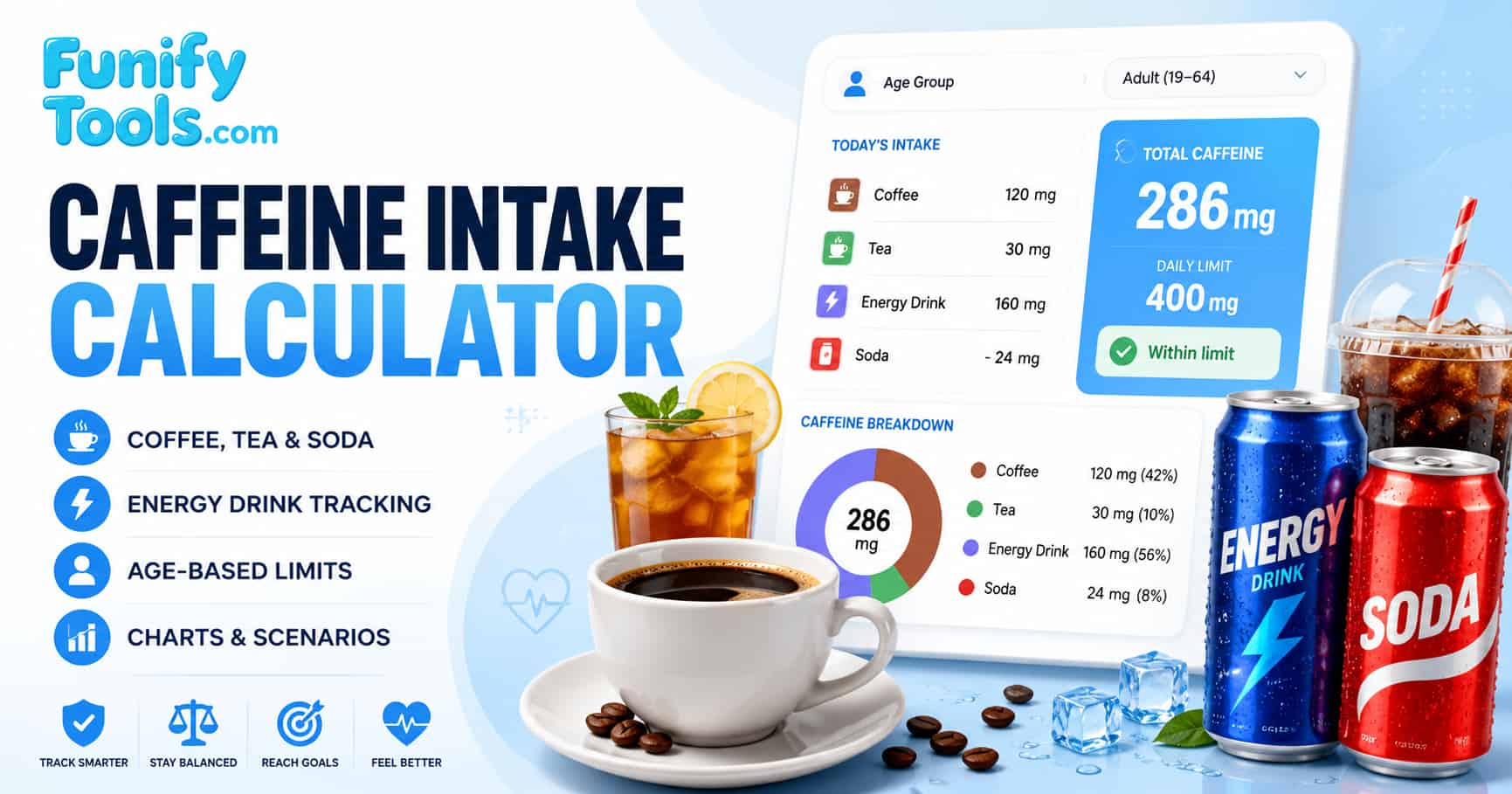
Caffeine is a natural stimulant found in coffee beans, tea leaves, cacao pods, kola nuts, and guarana. It works by blocking adenosine receptors in the brain, which helps reduce fatigue and increase alertness. Millions of people rely on their morning coffee or afternoon tea to stay focused, but it is important to understand how much caffeine you consume each day. A single daily total can be hard to estimate because the same drink category can vary widely by serving size, brand, roast level, brewing method, and recipe. For example, a drip coffee from a café may contain significantly more caffeine than a standard home-brewed cup. Using this daily caffeine intake calculator can help you track your consumption more accurately and compare it with general guidelines. Caffeine is absorbed quickly through the gastrointestinal tract and reaches peak concentration in the bloodstream within 30 to 60 minutes of consumption. Its effects on the central nervous system can last for several hours depending on individual metabolism and the amount consumed.
How caffeine values are estimated for each drink
This calculator uses typical caffeine amounts per serving based on widely accepted averages from health authorities and food composition databases. These values are convenient planning estimates, not exact nutrition facts. Actual caffeine content can vary depending on the brand, brewing time, water temperature, and serving size. Always check product labels for the most accurate information, especially for bottled or canned beverages. Understanding the caffeine content per serving is the first step toward responsible consumption, and the table below shows the standard values this calculator uses as a baseline for estimation.
| Drink | Serving used here | Caffeine value |
|---|---|---|
| Coffee | 8 oz cup (drip brewed) | 95 mg |
| Tea | 8 oz cup (brewed black) | 47 mg |
| Energy drink | 8 oz serving (standard) | 80 mg |
| Soda | 12 oz can (colas) | 34 mg |
Caffeine content in common beverages and foods
Caffeine is present in many beverages and foods beyond the four main categories used in this calculator. Specialty coffee drinks such as lattes, cappuccinos, and cold brews can contain significantly more caffeine than a standard drip coffee. Similarly, dark chocolate, certain over-the-counter pain relievers, and pre-workout supplements may add unexpected caffeine to your daily total. The table below provides a broader view of caffeine levels across popular items to help you make informed choices about what you consume throughout the day.
| Beverage or food | Typical serving | Approximate caffeine |
|---|---|---|
| Drip coffee | 12 oz (grande) | 145 mg |
| Cold brew coffee | 12 oz | 200 mg |
| Espresso | 1 shot (1 oz) | 63 mg |
| Green tea | 8 oz cup | 28 mg |
| Matcha tea | 8 oz cup | 70 mg |
| Dark chocolate (70-85%) | 1 oz (28 g) | 23 mg |
| Milk chocolate | 1 oz (28 g) | 6 mg |
| Energy shot | 2 oz bottle | 200 mg |
Daily reference limits by age group
Health organizations such as the U.S. Food and Drug Administration (FDA) and the European Food Safety Authority (EFSA) have published general guidelines for caffeine consumption. The adult setting uses 400 mg per day as a common reference limit for healthy adults, which is roughly equivalent to four 8 oz cups of coffee. The teen and child settings use lower simple reference limits so the result is easier to interpret for younger users. Adolescents and children are generally more sensitive to caffeine because of their smaller body mass and developing nervous systems. Pregnant individuals are often advised to limit caffeine to 200 mg per day. For more details, review the official FDA caffeine guidance and the EFSA caffeine safety summary.
| Age group | Daily reference limit | Notes |
|---|---|---|
| Adult (19+) | 400 mg | Common FDA and EFSA reference for healthy adults |
| Teen (13 to 18) | 100 mg | Lower simple reference used for younger users and sleep sensitivity |
| Child (4 to 12) | 45 mg | Conservative tracking reference, not a recommended intake |
| Pregnant adults | 200 mg | Common clinical guidance; consult your healthcare provider |
Health effects of moderate and excessive caffeine consumption
Moderate caffeine consumption — typically defined as 200 to 400 mg per day for healthy adults — has been associated with several potential benefits including improved cognitive performance, increased alertness, enhanced physical endurance, and a lower risk of certain conditions such as Parkinson's disease and liver fibrosis. However, excessive intake can lead to negative side effects such as anxiety, restlessness, digestive issues, rapid heartbeat, and sleep disturbances. Consuming more than 600 mg per day on a regular basis may increase the risk of chronic insomnia, nervousness, and cardiovascular stress. It is also important to consider how caffeine interacts with medications, supplements, and alcohol. The table below summarizes the general classification of caffeine intake levels and their typical associated effects.
| Intake level | Daily amount | Typical effects and considerations |
|---|---|---|
| Low | Less than 200 mg | Mild stimulation, improved focus, minimal risk for most healthy adults |
| Moderate | 200 to 400 mg | Enhanced alertness and performance; considered safe for healthy adults |
| High | 400 to 600 mg | Increased risk of anxiety, jitteriness, and sleep disruption |
| Excessive | More than 600 mg | Significant risk of insomnia, palpitations, digestive distress, and dependency |
Factors that affect caffeine sensitivity
Not everyone processes caffeine at the same rate. Genetics play a major role in how quickly your liver metabolizes caffeine through the CYP1A2 enzyme. Some people are "fast metabolizers" who clear caffeine quickly, while others are "slow metabolizers" who may feel its effects for many hours. Other important factors include body weight, age, medication interactions, sleep deprivation, and tolerance developed through regular consumption. If you experience anxiety, jitters, insomnia, or digestive discomfort after caffeine, you may be more sensitive than average. A search for caffeine sensitivity symptoms and causes can provide additional insight into how your body may respond differently. Hormonal changes during menstruation, pregnancy, and menopause can also alter how caffeine is metabolized, making some women more sensitive at certain times.
How caffeine affects sleep quality and circadian rhythm
Caffeine can significantly impact sleep quality even when consumed many hours before bedtime. Because caffeine blocks adenosine receptors that promote sleepiness, drinking coffee or energy drinks in the afternoon or evening can delay sleep onset, reduce total sleep time, and decrease the proportion of deep sleep. The half-life of caffeine in most adults ranges from 3 to 6 hours, meaning that half of the caffeine consumed at 4 PM may still be active in your body at 10 PM. For individuals who are sensitive to caffeine or who struggle with insomnia, experts often recommend avoiding caffeine after 2 PM or limiting total afternoon intake. If you are curious about how your own sleep patterns are affected, you can search for caffeine and sleep quality effects to learn more about the relationship between caffeine timing and restful sleep.
| Consumption time | Estimated active duration | Recommended cutoff for good sleep |
|---|---|---|
| Morning (6 AM to 10 AM) | Clears by early afternoon | Safe for most people; minimal sleep disruption |
| Midday (10 AM to 2 PM) | May linger into evening | Moderate risk; consider reducing serving size |
| Afternoon (2 PM to 6 PM) | Active during bedtime hours | High risk; avoid if you are sensitive or have insomnia |
| Evening (After 6 PM) | Significant sleep disruption likely | Avoid completely for best sleep quality |
Tips for tracking and managing your caffeine intake
- Check product labels for bottled coffee, canned energy drinks, and ready to drink tea — many contain more caffeine than home-brewed versions.
- Count late day caffeine separately if you are tracking sleep quality, as caffeine has a half-life of roughly 3 to 6 hours in most adults.
- Use the scenario comparison feature in this calculator to compare your usual day with a lower caffeine plan and see how small changes add up.
- Be mindful of hidden caffeine sources such as chocolate, protein bars, gum, and certain medications like Excedrin or Midol.
- Ask a clinician for personal guidance if you are pregnant, taking medication, or managing a health condition such as anxiety, high blood pressure, or acid reflux.
- Consider keeping a simple daily log of caffeine intake alongside notes about your sleep quality, energy levels, and mood to identify patterns over time.