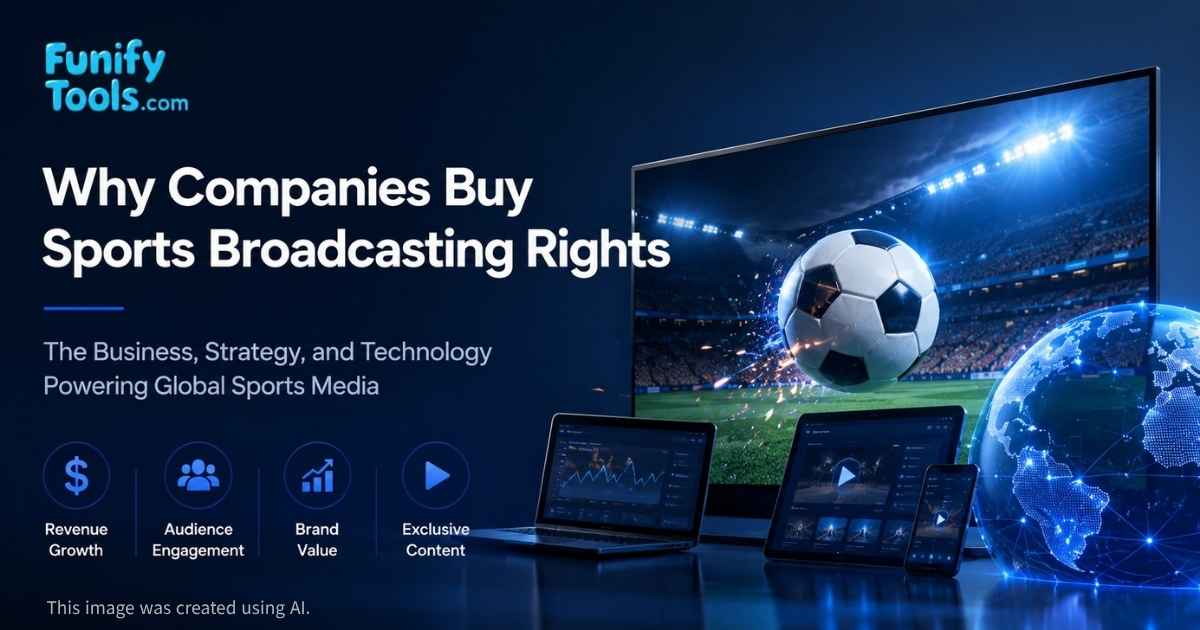
Apple's F1 Deal and the Logic of Streaming
Starting in 2026, Apple will become the exclusive U.S. broadcast partner for Formula 1 through Apple TV. On the surface, this looks like another big sports media deal. But if we look more closely, it explains why technology companies are spending so much money on sports broadcasting rights.
Sports rights are not just about showing a match or a race. They are about building habits. A drama series can become popular, but once viewers finish it, they may leave the service. Live sports work differently. They happen on a schedule, create urgency, and bring people back repeatedly. That repeated behavior is extremely valuable in the streaming business.
Apple's Formula 1 deal is one of the clearest examples of this shift. Apple is not simply buying race footage. It is buying a weekly rhythm, a passionate fan base, live attention, data-rich storytelling, and a way to connect Apple TV, Apple Sports, iPhone, Apple Watch, Apple News, Apple Music, and other services into one experience.
What Apple Is Actually Buying
Under the five-year partnership, Apple TV will carry Formula 1 races in the United States beginning with the 2026 season. Apple has said that coverage will include practice sessions, qualifying, Sprint sessions, and Grands Prix. Some races and all practice sessions will also be available for free in the Apple TV app during the season.
That free access matters. It lowers the barrier for casual viewers who may be curious about F1 but not ready to pay immediately. Once those users enter the Apple TV app, Apple can introduce them to the broader viewing experience, other content, and eventually paid subscriptions.
Financial terms were not officially disclosed, but industry reporting has placed the annual value around the $140 million range, higher than ESPN's previous reported fee. Whether the exact number is higher or lower, the strategic message is clear: live sports have become one of the few types of content that can still command premium prices.
Apple's F1 film also matters in this context. A successful movie can make a sport feel more familiar, cinematic, and emotionally accessible. When that storytelling connects to live races, documentaries, highlights, statistics, and real-time updates, the content becomes more than a broadcast. It becomes a year-round fan journey.
Why Sports Rights Are So Valuable
The streaming industry has a churn problem. People subscribe for one show, watch it, and cancel. Platforms need reasons for users to stay. Live sports solve part of that problem because they create appointment viewing.
A race happens at a specific time. A championship battle unfolds over months. Fans want to watch live because the result matters immediately, and because the social conversation happens in real time. Highlights are useful, but they do not fully replace the feeling of watching the event as it happens.
This is why sports can reduce churn. If a user knows that another race, match, or game is coming soon, cancellation becomes less attractive. The platform becomes part of the user's weekly routine instead of a temporary entertainment stop.
For companies, that routine has enormous value. It increases viewing time, improves retention, creates predictable traffic, and makes the platform more attractive to advertisers and sponsors.
Why Formula 1 Fits Apple So Well
Formula 1 is especially attractive because it is not only a race. It is a combination of sport, technology, luxury branding, engineering, data, global travel, team strategy, and personality-driven storytelling.
The live race is just one part of the experience. Fans also follow practice results, qualifying performance, tire strategy, pit stops, driver radio, onboard cameras, constructor standings, penalties, technical updates, and post-race analysis. This gives Apple many ways to build engagement before, during, and after each Grand Prix.
That is where Apple's ecosystem becomes important. Apple TV can be the main screen. Apple Sports can provide live scores, standings, and updates. iPhone can show Live Activities on the lock screen. Apple Watch can deliver quick alerts. Apple News can carry stories and analysis. The same fan can move between devices without feeling like they are leaving the experience.
Formula 1 is also visually and technically polished, which fits Apple's brand. It is global, premium, fast, data-heavy, and increasingly popular with younger audiences in the United States. For a company that cares deeply about design and user experience, F1 is a natural kind of sports property to build around.
The Habit Loop of Streaming
Streaming platforms used to compete mostly through libraries: more movies, more shows, more original series. That still matters, but libraries alone are not enough. Viewers have too many choices, and attention is fragmented.
Sports create a different kind of relationship. The schedule tells viewers when to return. The season gives the story structure. The standings create stakes. Rivalries keep people emotionally involved. A single race may end in two hours, but the conversation continues through highlights, analysis, social media, podcasts, and previews for the next race.
That is the habit loop Apple is likely aiming for. Watch the race on Apple TV. Check live information on Apple Sports. Receive updates on iPhone. Revisit highlights later. Read analysis before the next event. Repeat the cycle across the season.
This is why sports rights can be worth more than ordinary content. They do not only fill time. They shape time.
Advertising, Sponsorship, and Premium Attention
Live sports are also valuable because viewers pay attention. In on-demand entertainment, many people skip, pause, multitask, or watch later. In live sports, the moment matters. A pit stop, penalty, crash, overtake, or final lap can happen at any second.
That kind of attention creates premium advertising and sponsorship opportunities. But Apple is unlikely to copy the traditional cable model exactly. The company usually protects the user experience carefully, so the more interesting opportunity may be contextual and integrated monetization.
Formula 1 is full of data: lap times, tire choices, sector speeds, championship standings, team radio, and strategy calls. Sponsorships or branded features can be built around information rather than simple interruption. If done well, a data panel or race insight can feel useful instead of annoying.
This is one reason F1 is such a good fit for a modern streaming platform. The sport already invites second-screen behavior. Fans want numbers, timing, context, and analysis while the race is happening.
Bundles Make the Deal More Powerful
Sports rights become even more effective when they are connected to bundles. A bundle lowers the psychological cost of subscribing because the user feels they are getting more than one thing at once.
Apple already has a broad services business, and Apple TV can sit alongside other Apple services. When sports are added, the bundle becomes stickier. A user may first arrive for F1, but stay for movies, original series, Apple Music connections, Apple News coverage, or other live events.
This is why the economics of sports rights should not be judged only by whether one package directly pays for itself. The real value may appear in subscriber retention, device engagement, service bundling, brand strength, and the amount of time users spend inside the Apple ecosystem.
Why Leagues Like Streaming Platforms
From Formula 1's perspective, the appeal is also clear. A league wants money, but it also wants growth. Traditional TV can deliver reach, but streaming platforms can offer younger audiences, better data, more personalized experiences, and deeper integration with digital products.
Formula 1 has been growing in the United States, helped by new races, stronger storytelling, and a younger fan base. Partnering with Apple gives F1 access to a massive device network and a company known for polished consumer experiences.
For the league, this is not only about replacing one broadcaster with another. It is about finding a partner that can package the sport as a modern digital experience, not just a Sunday broadcast.
The Challenges Are Real
Of course, the strategy is not risk-free. The first challenge is rights inflation. Premium sports rights continue to become more expensive, and once prices rise, it is difficult for the market to return to older levels.
The second challenge is fragmentation fatigue. Fans increasingly need several apps and subscriptions to watch the events they care about. If every league moves behind a different paywall, viewers may become frustrated even if each individual service is good.
The third challenge is reliability. Live sports leave very little room for technical failure. Buffering, latency, login problems, regional confusion, or poor customer support can damage trust quickly. A user may tolerate a delay in a normal show, but not during the final laps of a race.
Streaming companies therefore need to solve more than content acquisition. They need to deliver stable infrastructure, clear pricing, low-friction access, strong support, and a viewing experience that feels better than cable, not merely different from it.
What This Says About the Future of Streaming
Apple's F1 deal shows that streaming is moving beyond on-demand entertainment. The next stage is about live events, real-time data, community, and ecosystem design.
If Apple can make Formula 1 feel seamless across TV, phone, watch, news, and sports apps, it may show how streaming can become more than a video library. It can become a full media environment where live content, information, devices, and services reinforce one another.
Beginning in 2026, the U.S. Formula 1 viewing experience will become a real-world test of this strategy. If live tension, data-rich companion features, selective free access, and bundle economics support one another, streaming may do more than replace cable. It may become the better default.
In the end, the core issue is not price alone. It is habit. Companies buy sports broadcasting rights because sports bring people back. And in the attention economy, a recurring habit may be one of the most valuable assets a platform can own.
Thank you for reading, and I hope you have a wonderful day.
Why are sports broadcasting rights so valuable to streaming platforms?
Sports rights are valuable because they bring in new subscribers, encourage repeat visits, and reduce churn over time. Unlike one-time hit shows, live sports create weekly viewing habits, which helps platforms keep users engaged for longer periods.
Why is Formula 1 especially attractive for a company like Apple?
Formula 1 is not just a race broadcast. It includes practice sessions, qualifying, sprint races, highlights, onboard footage, team strategy, and real-time data. That makes it a strong fit for Apple's ecosystem, where live viewing, mobile alerts, statistics, and connected device experiences can work together.
What does Apple's F1 deal say about the future of streaming?
It suggests that streaming platforms are moving beyond on-demand entertainment and investing more in live events that drive habit and loyalty. If Apple succeeds with F1, it could become an important example of how streaming services use sports to compete with, and possibly replace, traditional cable viewing.
This article is also available in Korean: Read the Korean version